



Knowing what your competitors are doing helps you make smarter decisions. It shows you where they’re strong, where they fall short, and how they position themselves in the market.
To win business against your competitors, you need to put yourself in the shoes of your customers. When they are looking for a product or service, they likely will shop around first. If you understand what their experience browsing through options is like, you will be in a stronger position to make your solution stand out.
In this article, you’ll learn what competitor analysis is, why it’s important, and how to run one step-by-step. You’ll also see how Salesforce can support this process with tools that make your analysis easier to track and organise.
What you’ll learn:
- What is a competitor analysis?
- What are the benefits of doing a competitor analysis?
- What areas should you cover during competitor analysis research?
- How to conduct a competitor analysis
- Vodafone vs. Telstra: competitive analysis example
- Tools to help you gather competitive intelligence
- Master the competitor analysis with Salesforce
- FAQs
What is a competitor analysis?
A competitor analysis helps you understand what similar businesses offer, how they price and market their products, and what their strengths and weaknesses are. This gives you a clear view of where you could stand out or expand your offerings.
For example, if you are selling software, you might compare all the features your competitors offer. If you find you offer something they don’t, it can become a unique selling point for your brand.
Businesses often focus on a few core areas in their analysis, including:
- Product features: What features do they offer, and how are they received by customers
- Pricing models and add-ons: Subscription levels, discounts for annual pricing, free trials, and bundles
- Marketing and sales: Marketing channels they use, what messages they share, any promotions, and, if you can, the sales outreach they are doing
- Customer experience: Onboarding, support, self-service knowledge, and customer reviews
- Brand positioning: How they present themselves and who they target, the voice they use and the pain points they talk to
Do more with your data with scalable insights from Tableau
As the world’s leading AI-powered analytics platform, Tableau makes it easy to see, understand and act on data wherever you work.


What are the benefits of doing a competitor analysis?
When you know what similar brands are offering, it becomes easier to sharpen your product and messaging. It also brings to light the areas where you can stand out, which can be your winning advantage in crowded markets.
Here are some of the key benefits you can expect from running a competitor analysis.
Benefits of Competitor Analysis
| Benefit | Description |
| Identifies market gaps | Shows where customer needs aren’t being met |
| Reveals opportunities and threats | Shows areas to grow and issues to resolve |
| Informs strategy | Helps you prioritise the right product and marketing decisions |
| Improves brand positioning | Clarifies how you’re different and why customers should choose you |
| Helps marketing | Gives you messaging ideas based on what resonates in your category |
| Keeps you agile | Helps you respond to industry changes before they impact you |
To get started building your table of research, Business.gov.au has a free competitor analysis template you can use as a guide.
What areas should you cover during competitor analysis research?
A competitor analysis shows you how different brands operate, what customers respond to, and where there’s room for you to stand out. It also makes your decisions more grounded because you’re working from evidence, not assumptions.
Below are the main areas companies review during their analysis, along with questions that help you assess each one.
1. Product
Look at their products’ core features, the quality, and the experience they offer their customers.
- What features do their products have that yours don’t?
- What features do you have that no one else does?
- How do their customers rate the quality of their products?
- What is the buyer experience like?
2. Cost
Examine how your competitors structure their pricing and how they justify it to customers.
- How much is their product?
- What’s included in the base cost?
- Do they offer package deals, discounts, or a free trial?
- How does the pricing compare to the other options on the market?
3. Place
Examine where and how competitors sell.
- Do they reach a segment of customers you don’t?
- Do they sell in the same regions as you?
- What channels do they use? Online, in-store, partner networks?
4. Promotion
Review their marketing and sales activity.
- What channels are they active on (social media, emails, print)?
- How do they launch new products or campaigns?
- What messages seem to work well with their audience?
- What’s their top-visited page on Google?
5. Brand
Consider how competitors position themselves and connect emotionally with customers.
- What tone or personality do they use?
- What value or feeling do they promise?
- Who do they target in their advertising?
If you can answer these questions, it will give you a better view of why competitors succeed and where their gaps are.
How to conduct a competitor analysis
A competitor analysis can be done in one big chunk or as a side project alongside your other tasks. The goal is to develop a spreadsheet that turns your suspicions into facts, that you can then use to inform your strategy.
At a high level, the steps look like this:
- Identify your key competitors
- Gather the right information
- Analyse and organise your findings
- Turn insights into actions
- Continuously measure results
1. Identify your competitors
Start by listing all the companies a customer might choose instead of you. You can find this by researching products online or by asking AI.
In your list, include direct competitors offering similar products, and indirect competitors solving the same problem in a different way.
At this stage, you want to have a spreadsheet with the competitors listed, links to their websites, and the ways you are going to measure them. See the section above for the key things you might want to note down.
2. Gather information
Look for details that show how each competitor operates. Check their website, pricing page, product demos, customer reviews, social media activity, and any case studies they publish.
Note down facts like what they sell, how they sell it, and how customers respond. Once you’ve done this, you should have a spreadsheet full of data.
Salesforce tip: You can use Marketing Cloud to monitor how competitors show up across email, social, and advertising channels.
3. Analyse and organise
Sort your findings into what helps you make decisions. This could be where competitors are strong, where they’re weaker, and what this means for you. Patterns usually show up once you compare what everyone offers side by side.
Frameworks (optional): If you want extra structure, tools like SWOT, a pricing matrix, or a feature comparison table can help you spot opportunities quickly.
4. Apply what you’ve learned
This is the stage where you turn your insights into actions. This might mean refining your product roadmap, adjusting your pricing, strengthening your messaging, or building new campaigns that highlight your advantages.
Salesforce tip: Use Sales Cloud or CRM Analytics to feed these insights directly into sales playbooks or customer journeys.
5. Continuously measure results
Check in regularly to see what’s changed in your performance and in theirs. Competitors shift quickly (even based on the work you’re doing), so treat this as an ongoing process, not a one-off project. Try to have quarterly or monthly reviews with updated competitor insights.
Take the first step with Starter Suite.
Discover the all-in-one CRM for small businesses. Starter Suite brings marketing, sales, service, and commerce tools together, so you can grow your business with one easy-to-use suite.
Vodafone vs. Telstra: competitive analysis example
Let’s compare two major Australian telcos as a way to show how a competitor analysis works in practice.
Vodafone and Telstra operate in the same market but take very different approaches to coverage, pricing, and customer experience.
Looking at them side by side helps highlight where each brand wins and where opportunities open up for others in the market.
Comparing Competitors Vodafone and Telstra
| Telstra | Vodafone | |
| Network coverage | Widest national coverage, with a strong rural presence | Strong big city coverage, but weaker in remote areas |
| Pricing | Higher price point across mobile and broadband | Typically lower pricing and more frequent deals |
| Customer experience | Strong brand trust and plenty of support options | App-based support, 24/7 chat, and solid self-service options |
| Product range | Mobile plans, internet, 5G home internet, and enterprise plans | Mobile plans, internet, 5G home internet, and SIM-only plans |
| Market perception | People view them as the premium and reliable option | People view them as affordable and city-focused |
From this analysis, we can see that Telstra wins on national reach, reliability, and brand strength, which appeals to large business customers and regional users. On the flip side, Vodafone focuses on affordability and has good coverage in the city, giving it an edge with cost-aware customers who don’t need remote coverage.
From Telstra’s perspective, they could win over some Vodafone customers by using their premium network reputation and introducing short-term discounted plans or bundled offers.
Tools to help you gather competitive intelligence
The right tools make competitor analysis faster, more objective, and easier to repeat. You can think about tools in a few core buckets:
- SEO and content tools: Track keywords, rankings, and competitor content (e.g., SEMrush, Ahrefs).
- Social listening tools: Monitor brand mentions and campaign activity (e.g., Brandwatch, Sprout Social).
- Web analytics tools: Review traffic sources, engagement, and on-site behaviour (e.g., Similarweb).
- Pricing and product trackers: Compare features, plans, and pricing changes over time.
- Review monitoring tools: Analyse customer feedback across Google, ProductReview.com.au, and app stores.
- CRM and BI tools: Bring all your data together for deeper insights (e.g., Salesforce CRM, Tableau).
Experience Salesforce with an interactive demo.
Get hands on with our products and explore real use cases and solutions built for agentic enterprises.
Master the competitor analysis with Salesforce
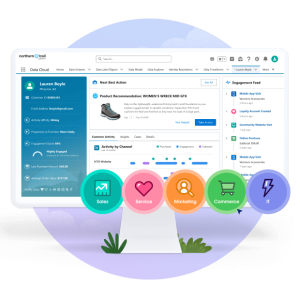
Salesforce makes competitor analysis easier by pulling all your data into one place. You can track competitors’ products, pricing, marketing activity, and performance, then use dashboards and reports to spot patterns and opportunities quickly.
With tools like CRM Analytics and Tableau (our AI-powered reporting tool), teams can compare trends, map customer journeys, and run simple frameworks like SWOT without switching between platforms.
Having everything in one place also helps you share insights across sales, marketing, and product, so everyone is working from the same evidence.
When you centralise this information and turn it into clear insights, your business can stay ahead of market shifts, continue to build on strategy, and spot new opportunities faster.
A strong competitor analysis helps you understand the businesses your customers compare you to, what they offer, and where you can stand out. When you organise this information well, it becomes easier to shape your strategy and respond to shifts in the market.
To put these ideas into practice, you can explore all our product demos to see how tools like Marketing Cloud, CRM Analytics, and Data 360 support deeper competitive insights.
If you want to learn more about analysing your competitors and building your business strategy, our online learning platform Trailhead has plenty of courses to help.
FAQs
What are the 4 P’s of competitor analysis?
The 4 P’s stand for product, price, place, and promotion. This helps teams remember four key parts of a competitor analysis.
How often should you analyse your competitors?
Most teams review competitors every quarter, but some will do small monthly checks for major updates. If you have a large enough team or a product marketer, it can be helpful for them to frequently keep on top of competitors and only notify the wider team when something significant happens.
If you’re in a fast-moving category like software or ecommerce, you may want to review your competitors even more frequently to keep your strategy up to date.
Can I use AI to do a competitor analysis?
Yes, AI can be helpful for things like summarising competitor websites, reviewing pricing pages, or analysing review sentiment.
It’s a good idea to use AI as a research helper while you still make all of the strategic decisions based on the data. When using AI, make sure it shows you the sources of its information so you can verify everything is correct.
How can you see who your competitors’ audience is?
To define your competitors’ audience, you can look at things like:
- Their customer reviews or case studies
- The people who engage with their posts on social media
- The industries and roles they target on their website
- The keywords they rank for on Google, which show who they’re trying to attract
Together, these can give you a better picture of who they’re trying to reach and how similar it might be to your own ideal customer.