


Customer insights rarely reside solely in structured databases in rows and columns. Instead, significant enterprise value remains trapped within unstructured content —such as PDFs, knowledge base articles, email threads, customer interaction transcripts, media files, and web pages. Salesforce Data 360 bridges this gap by converting fragmented, unstructured information into highly structured, actionable context designed to power enterprise search, automated workflows, advanced analytics, and generative AI capabilities.
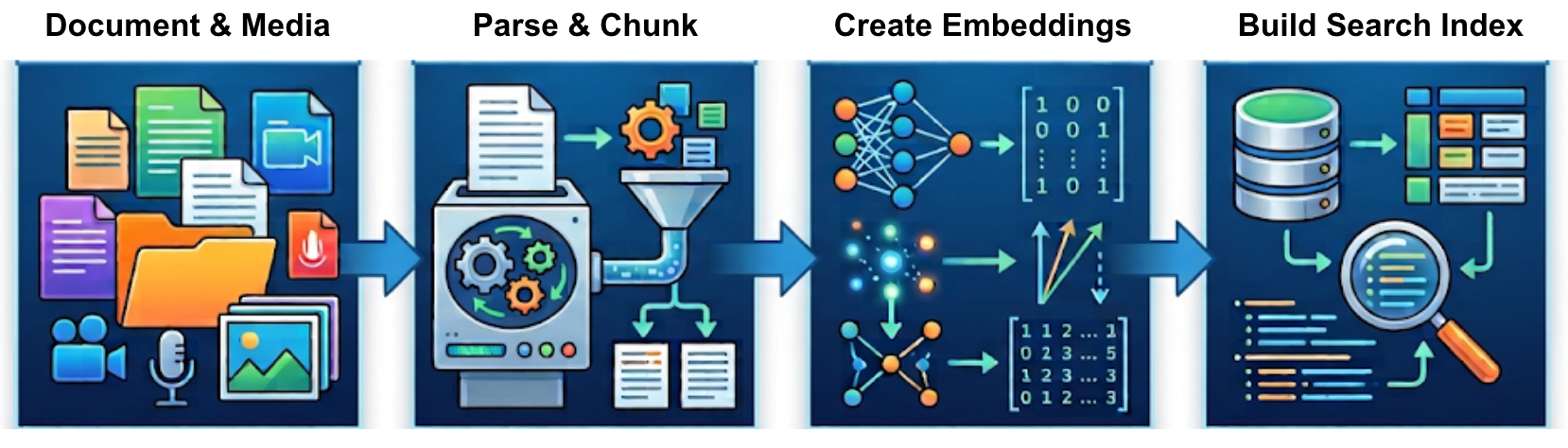
The RAG Pipeline: From Ingestion to Retrieval
The process begins by connecting or ingesting content from relevant sources. Data 360 then parses the material and divides it into smaller, meaningful chunks. These chunks are converted into vector embeddings — numerical representations that capture meaning — and stored in a searchable index.
When a user or autonomous AI agent submits a query, the retriever searches the vector index to extract the most relevant content passages. This Retrieval-Augmented Generation (RAG) architecture supplies Agentforce and other AI models with verifiable enterprise context rather than depending on general model knowledge. The result is more relevant and explainable response that is backed by traceable source citations.
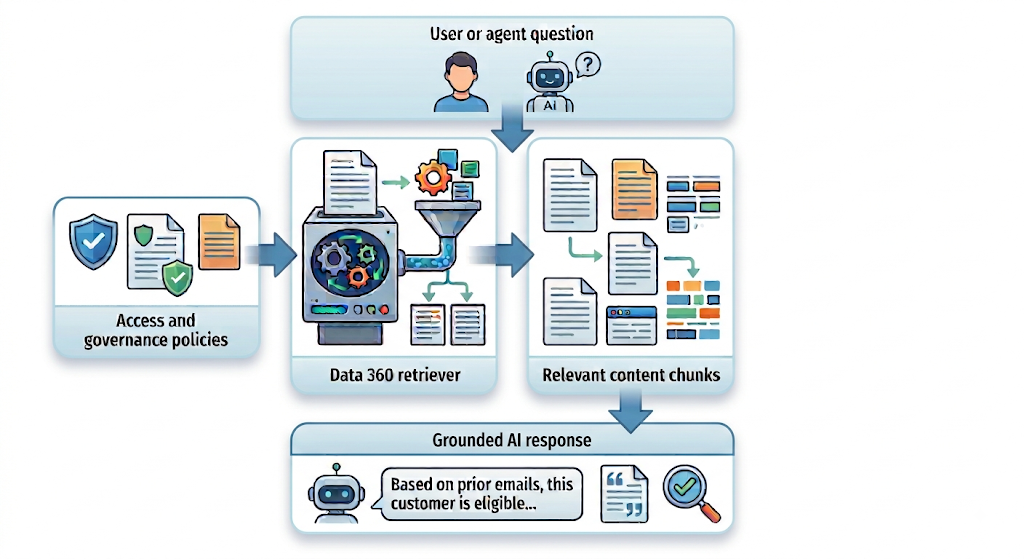
Building an Effective Processing Strategy
Effective implementation requires more than simply uploading documents. Teams should choose chunking strategies that reflect the structure of their content, retain useful metadata such as titles and source URLs, and test whether searches return accurate passages
Governance is equally important. Access controls, data classification, consent, and retention policies should apply throughout the content lifecycle so AI experiences use information appropriately.
Turning Content into Business Value
Unifying unstructured documents with core customer profiles in Data 360 enables high-impact operational use cases across business units:
- Customer Service: Service agents instantly surface specific troubleshooting steps embedded deep within multi-page technical manuals, reducing average handle time (AHT) and improving first-contact resolution.
- Sales & Account Management: Account executives automatically extract key buying signals, objections, and timeline commitments from past call transcripts and email chains to personalize discovery calls and proposal drafts.
- Autonomous AI Agents: Agentforce instances resolve complex multi-step user inquiries by grounding responses in verified internal policies, product specifications, and knowledge articles.
Ultimately, unstructured data processing turns previously difficult-to-use content into trusted, actionable context — helping businesses make better decisions and build more capable AI experiences.
Further reading: Salesforce Data 360 and Salesforce’s guide to creating search indexes and retrievers.