

The most extraordinary things often begin in the most ordinary ways. A conversation. A question. An idea shared out loud that invites others in. Along the way, people offer new perspectives, give their time, and lend their talents until what started with one person is carried forward by an entire community.
And what’s behind all that momentum? Joy. Real, contagious joy. The kind that comes from building something together. From seeing someone else’s passion become your own reason to show up.
At Salesforce, we feel that joy every day. It’s in the AI our employees build, the classrooms where they volunteer, the neighborhoods they serve, and the causes they champion. Their passions are deeply personal, but they have a remarkable way of bringing people together.
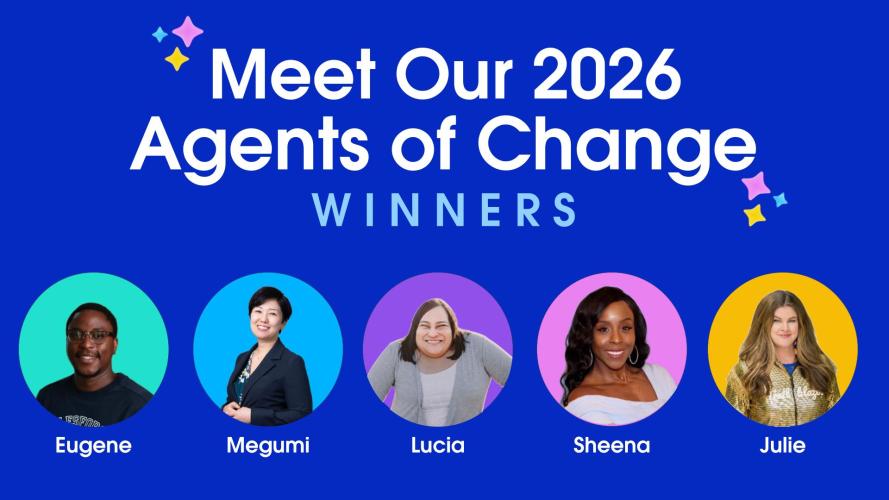
That’s the spirit behind the Agents of Change Awards. Each year, we recognize employees who have turned a personal passion into meaningful community impact by inspiring others to join them. This year’s five honorees remind us that giving back isn’t just something we do — it’s who we are.
Bringing AI literacy to every classroom: Sheena’s story
Meet Sheena, a lead specialist solution engineer in London.
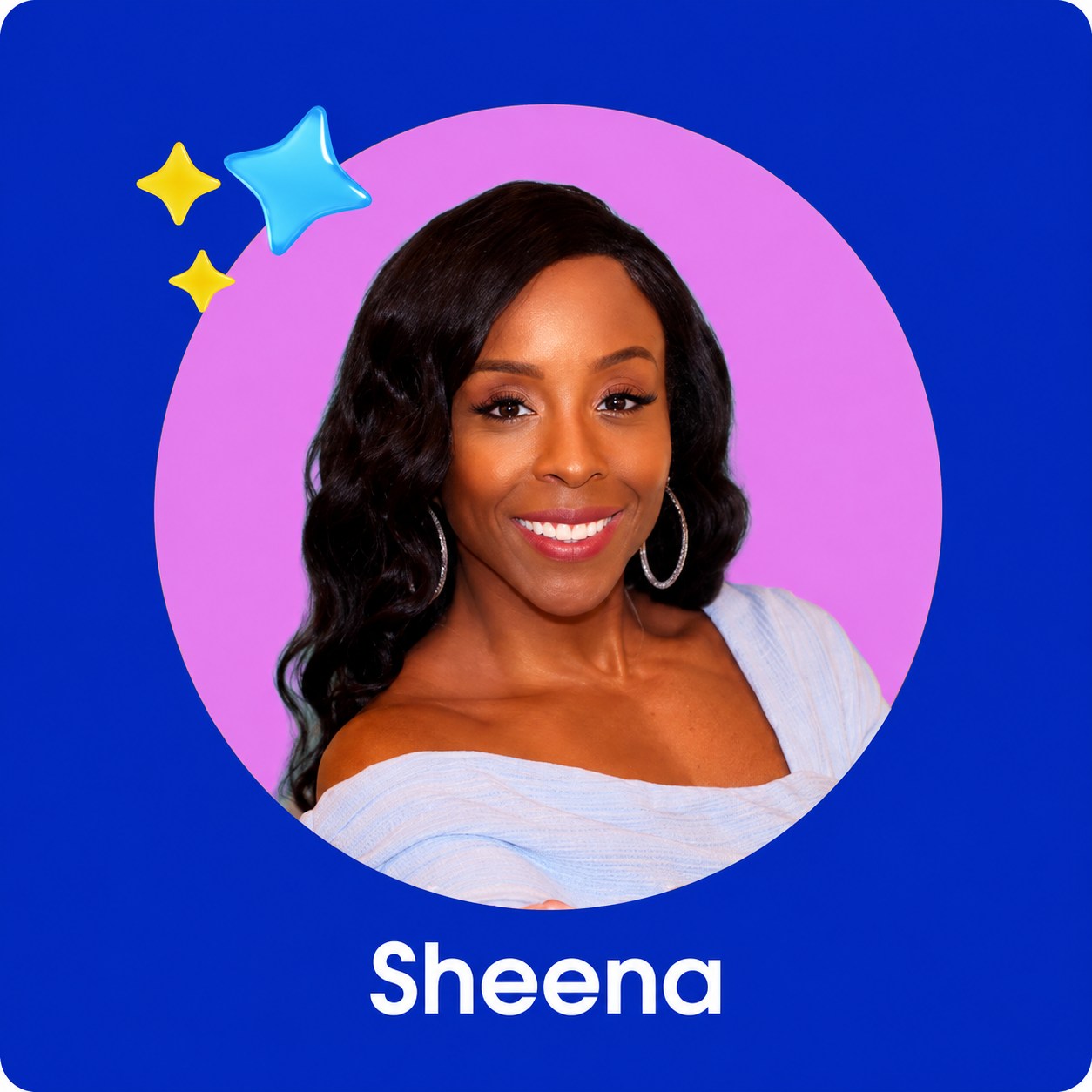
Sheena spends her days showing customers what’s possible with AI in her role of solution engineer. At home, she did the same for her two Gen Z kids, helping them navigate a world they’re about to inherit. Her instincts pushed her to think bigger: if she could help her own kids, why not thousands of others? That question sparked her mission to bring AI fluency to U.K. schools.
How did you get started with the Future Trailblazers program?
Future Trailblazers is a growing Salesforce’s UK-wide program that sends employees into schools to help students and teachers build the AI skills they’ll need for the future.
The moment I heard about it, I immediately raised my hand to help. I loved the idea but it didn’t yet have the infrastructure to scale. So our team deployed an entire technical platform, built on Salesforce technology, in six weeks, making it easier for employees and schools to connect. It’s been a highlight of my career to watch it grow. We have over a 1,000 employees registered, and easily achieved our first goal of reaching 10,000 students within a couple of months. Now we’re chasing 30,000 by the end of the fiscal year.
Adaptive AI curriculum is still new territory. How did you work to bring it to life?
As a mom of a neurodivergent son, building a program that works for every kind of learner was personal to me. Tailored accommodations for my son’s learning style were central to his success throughout his early education and high school. He’s now in university and continues to thrive through inclusive, personalized learning.
That experience guided an introductory call with a local primary school for students with special needs. After I understood what they needed, I worked with our content lead and the Neuroforce team to build a curriculum tailored to match how their students learn best. That success laid the groundwork for bringing this framework to the secondary level. Later this year, I’m co-facilitating these sessions with a Salesforce colleague, who’s also a parent at the school, to reach nearly 2,000 students.
What would you say to someone who wants to make this kind of difference but doesn’t know where to start?
Having 56 hours of volunteer time off (VTO) a year is a wonderful gift, and you don’t have to pick only one cause. Browse Slack channels, talk to teammates, join an Equality Group. You’ll find so many incredible people who are supporting equally incredible causes. My advice: just start. Even an hour can unlock a new interest. For me, the energy of these students inspires me endlessly, and I encourage every Salesforce employee to find the causes that light them up.
Continue reading about Salesforce’s longstanding commitment to education.

Scaling a lifetime of advocacy: Lucia’s story
Meet Lucia, a Workforce Navigator senior analyst in Michigan.
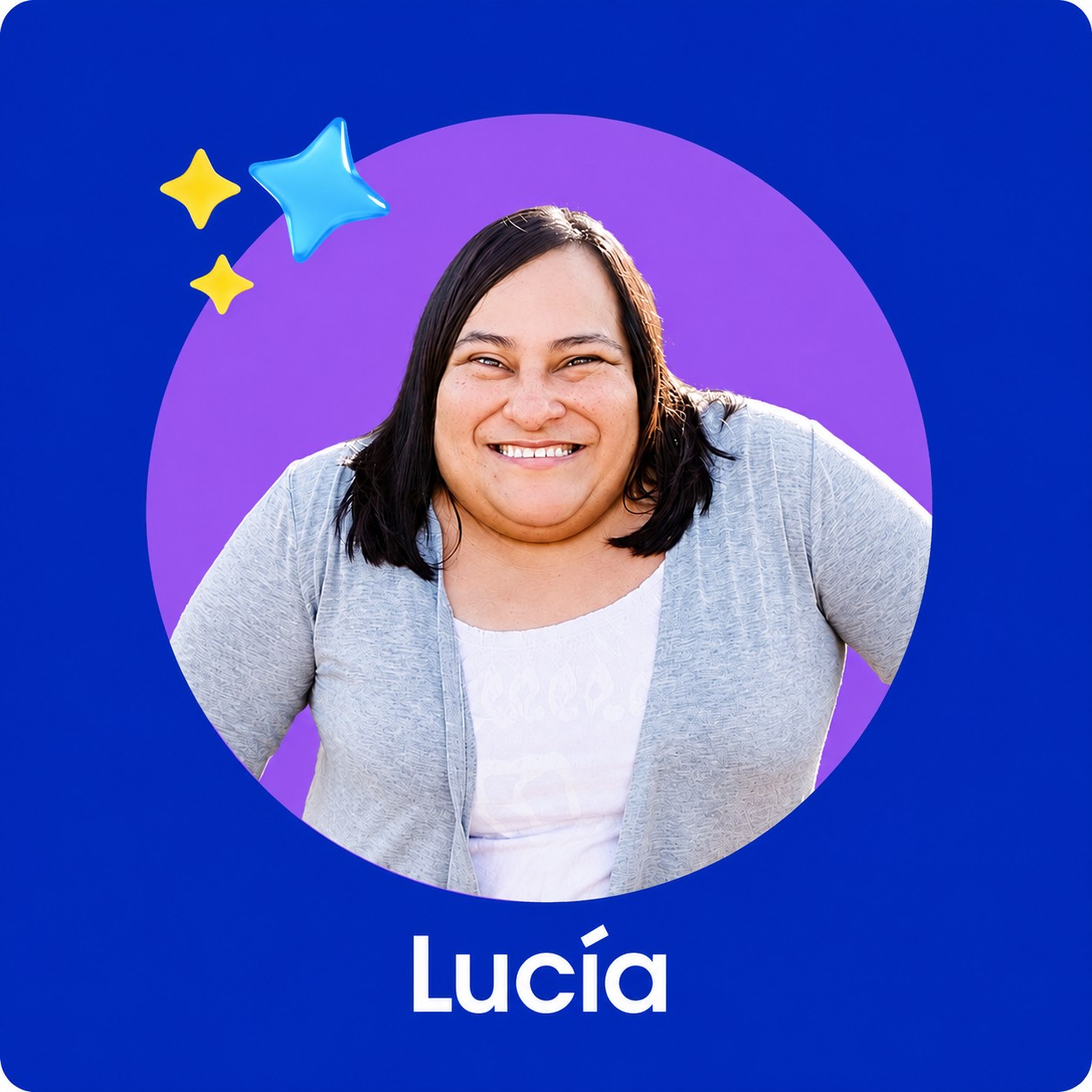
Lucia has always been an advocate. Long before Salesforce, she was quietly opening doors for people the tech industry too often overlooks. What changed when she got here wasn’t her mission, it was her reach. She took that same drive and built Workforce Navigators, a program that’s now connected hundreds of professionals with disabilities to paid, meaningful careers in tech around the world.
That momentum hasn’t stayed behind the scenes. Lucia has been on stages like Real Abilities NYC and her work with the Blind Institute of Technology is being featured in an upcoming docuseries set to premiere at Dreamforce, bringing real stories of inclusive employment to one of the biggest stages she’s had yet.
How did Workforce Navigators start, and how has it grown?
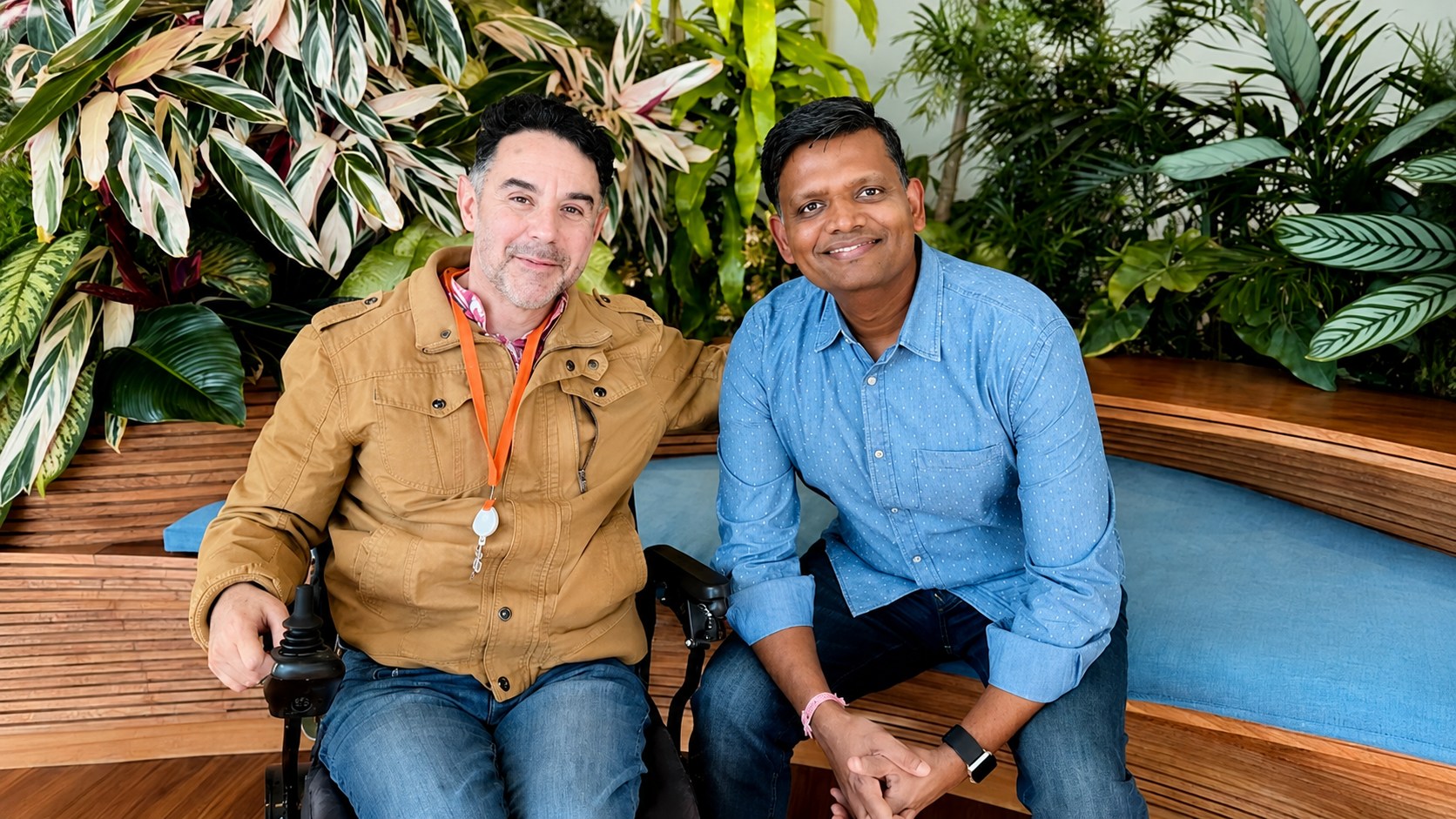
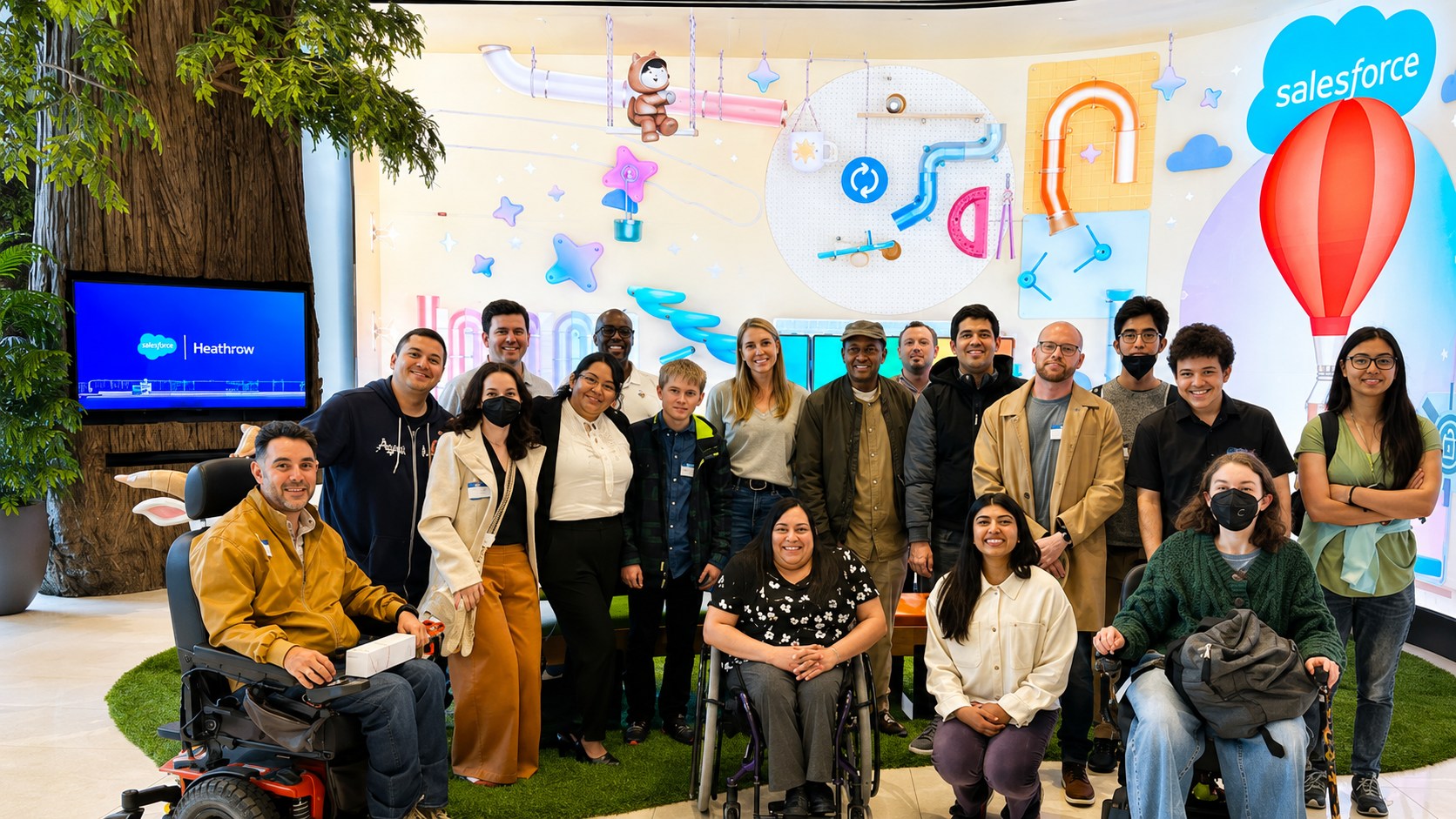
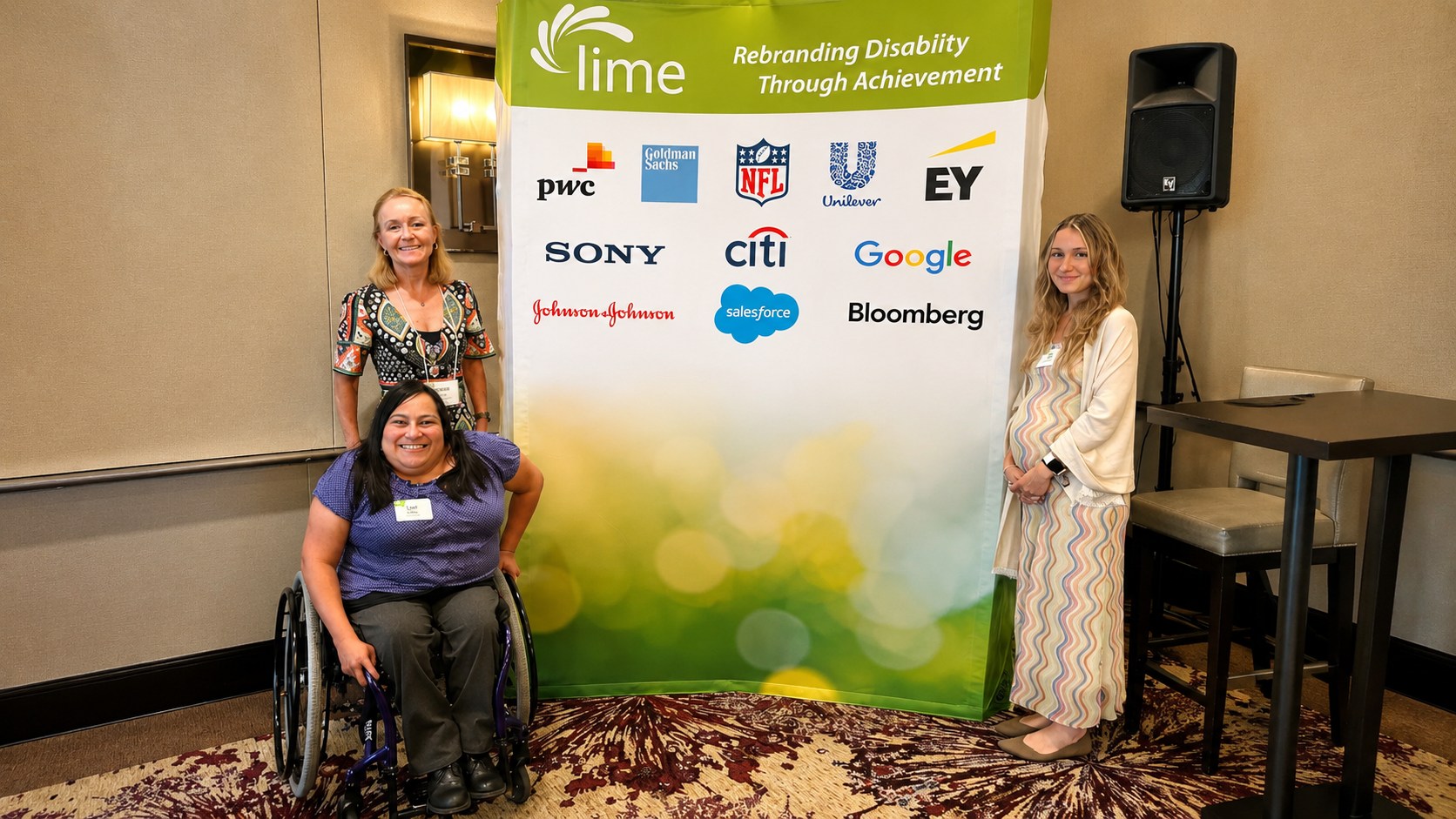
Workforce Navigators grew out of a genuine need. We saw incredible disabled talent getting overlooked, and knew we could bridge that gap. Once leadership said “We believe in this vision, now run with it,” that moment changed everything and turned this into a real talent strategy. It’s larger than I ever dreamed; we now have a team, a website, a scholarship program, partnerships with organizations like the Blind Institute of Technology, Lime Connect, and Get Force Certified. None of that happens without Salesforce’s tools and the trust of leadership.
What’s the moment that tells you Workforce Navigators is truly working?
The success can’t fully be captured on a spreadsheet (although I love watching the participant numbers grow!). What matters most is when a participant tells me, “I got the job,” or calls simply to share that they earned a certification. It’s watching someone move from unemployment to financial independence, entering a room where their accommodations aren’t a burden, but a standard tool for success. That shift in self-worth, and economic security, is what I care about most.
You were recently a panelist at Real Abilities NYC. What was that experience like for you?
I felt so honored to represent the Office of Accessibility. I was on stage with representatives from the BBC and Valuable 500 to talk about disability representation in the media, at the largest disability film festival in the world. I kept thinking about the people this conversation was for, every word mattered. When it was over, I realized this is what it looks like when Salesforce shows up, not only a logo on a sponsorship form, but a real voice in the room. And I was so proud to be that voice.
Continue reading about Workforce Navigators’ impact.
Turning everyday moments into AI breakthroughs: Julie’s story
Meet Julie, a senior program manager of technical assessments in North Carolina.
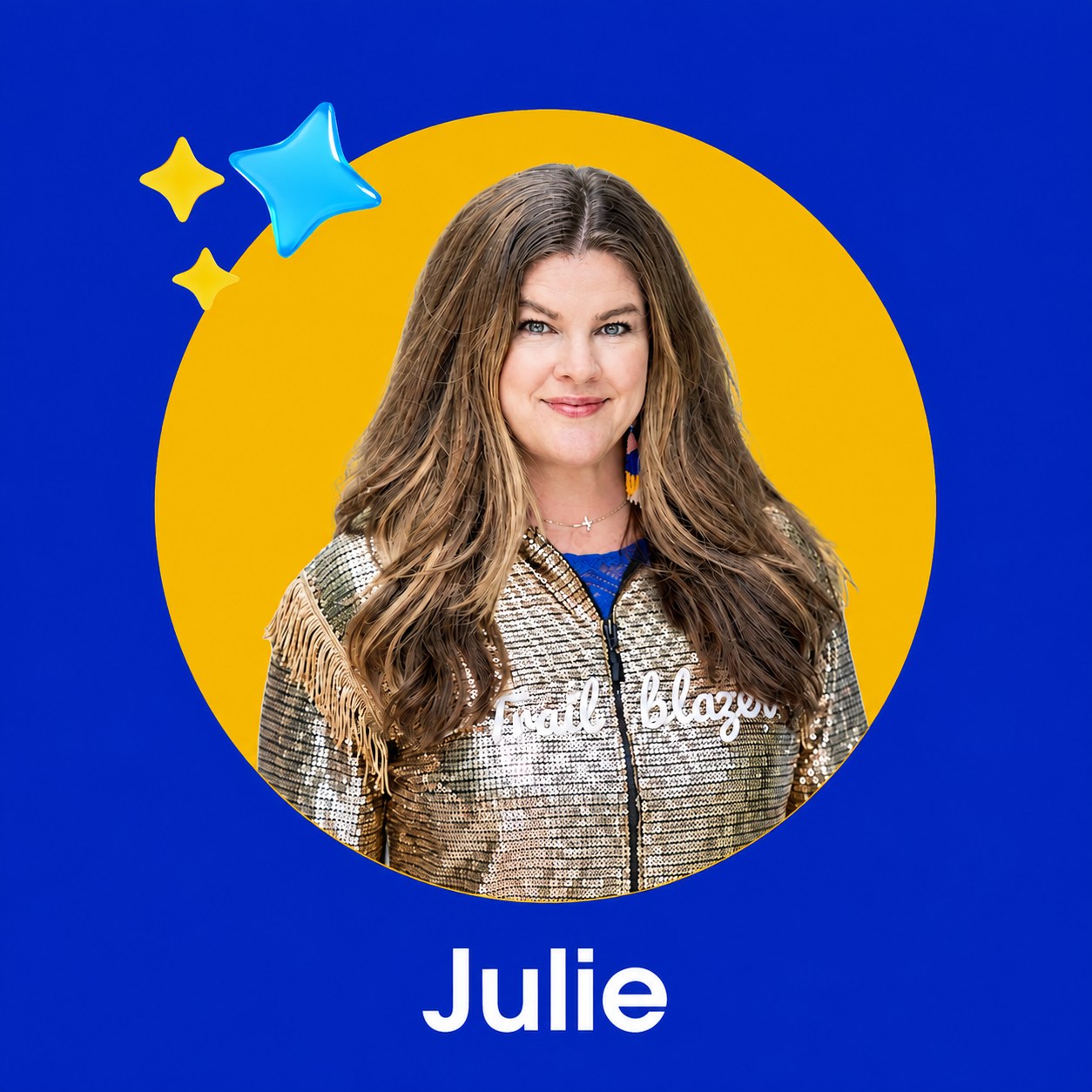
Julie has built a career around making complex things click. She builds the superbadge content on Trailhead for our newest technologies, often before those tools have even fully arrived. She carries that same “make it understandable” energy into every part of her life, reminding everyone around her that AI isn’t something to fear, it’s something to try.
You’ve found some pretty unexpected ways to make AI relatable — what’s your approach?
I look for the everyday version of the skill and introduce AI that way. I gave a talk at a Salesforce Women’s Network conference that called out that parenting teenagers is basically prompt engineering, it’s 20 questions just to land on one real answer. The point was to demystify AI: here’s how to do the same thing with an AI tool instead of with your teenager. I had a blast doing that.
I found another way to share vibe coding with some friends over dinner. We went around the table and vibe-coded a completely fictitious personality-test app for laughs. There are little ways to show how easy AI is to use and how much joy it can bring. It doesn’t always have to be deep technical work.
Why does representation in AI matter so much to you personally?
When my mother became the victim of a horrible financial fraud scheme, I used AI to help guide her through a legal nightmare. But AI did more than cut through the technical jargon. It gave us the clarity to understand what we were up against, and the confidence to advocate for ourselves instead of being talked over.
That’s why I’m passionate about teaching women and underrepresented groups how to use AI for good. If we’re not intentional, we risk leaving behind the people who need these tools most.
What keeps you experimenting, and where do you want to take that next?
The more I experiment in my personal life, the better ideas I bring back to work, and vice versa. I’m a big believer in coaching so I vibe-coded a self-coaching app for parents of teenagers, which taught me about product development and engagement, feeding right back into my own role. I want to keep finding ways to get more people connecting with each other, and with what’s coming next.
Continue reading about how Salesforce democratizes AI —
ensuring that our communities are never left behind.

From idea to impact in 12 weeks: Eugene’s story
Meet Eugene, a software engineer in San Francisco.
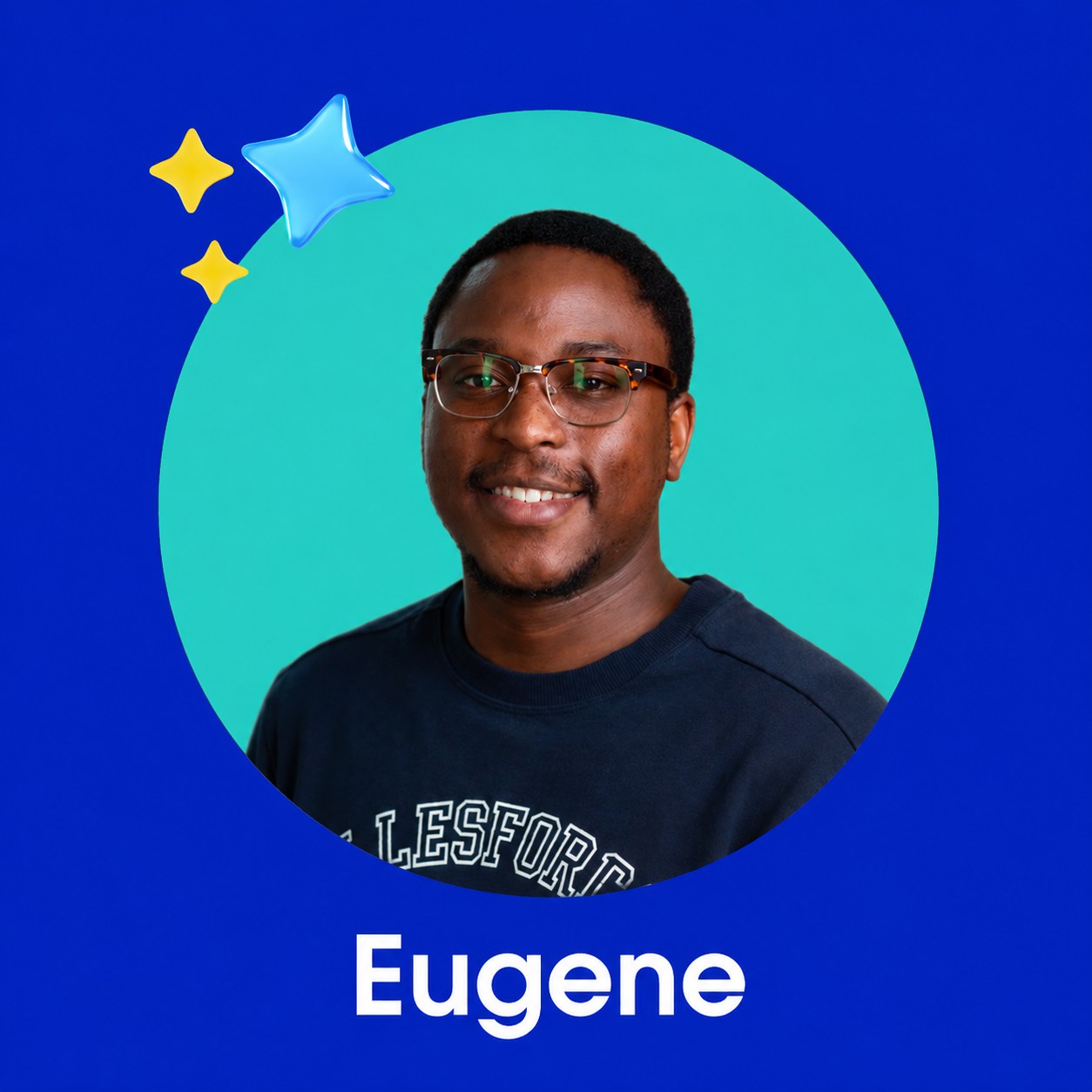
Some ideas need years to take shape. Eugene’s took 12 weeks. During his Futureforce internship, Eugene listened to a teammate’s “wouldn’t it be cool if” concept and built a working agent that integrates the Model Context Protocol (MCP) with Slack to give engineers a faster way to tackle complex technical challenges together.
When you ask Eugene what made it work, he leads with the people, not the product. Teammates jumping into huddles to troubleshoot, a community of builders sharing what they knew in real time, a team buzzing about the project before it was even finished, creating momentum that was hard to miss. Engineers across the company started reaching out to him with their own use cases, and what began as one team’s idea rolled out company-wide.
His first instinct, when he won the Agent of Change award, was to share the credit: “We won this award,” he told his manager. That’s Eugene’s impact: big ideas, shared generously.
We’re thrilled to have welcomed Eugene back as a full-time employee after his recent graduation.
You were so new to Salesforce. What made you feel ready to take on something that could reach so many people?
Honestly, I didn’t set out thinking this would be a big, company-wide thing. It started smaller. Rohan, an engineer on my team, had an idea for an agent you could talk to in Slack to resolve technical issues. I started building from there, one piece at a time, without overthinking how far it might go.
What made it possible was everyone around me. There was a whole community working on MCPs, and we even held a meeting to compare notes. I never felt like I was starting from zero, and that support is what kept me going. It might be possible to do this somewhere else, but it would’ve been a lot harder — Salesforce was really the right place to propel the work.
What was it like watching other teams get involved as this took off?
Exciting, but also validating in a way I didn’t expect. Even while I was still building, engineers on other teams were asking how it was going and what use cases it could cover. Then came the DMs: “This is what we’re thinking about, can you integrate it into what you’re building?” That’s when I realized this could solve more than one problem. Knowing that my team eventually took it into full production, and that it grew to that scale, is something I’m really proud of.
What’s one piece of advice for someone who has a big idea but doesn’t know where to begin?
Surround yourself with hardworking, talented, like-minded people you can bounce ideas off of. If you don’t know where to start, it’s probably because you’ve got too many ideas pulling at you to know which one to follow. Having people who can help you see the bigger picture is one of the best things you can have in your corner.
Continue reading about our Futureforce internships
and their impact around the company.

Creating space for everyone: Megumi’s story
Meet Megumi, a field enablement business partner in Tokyo.
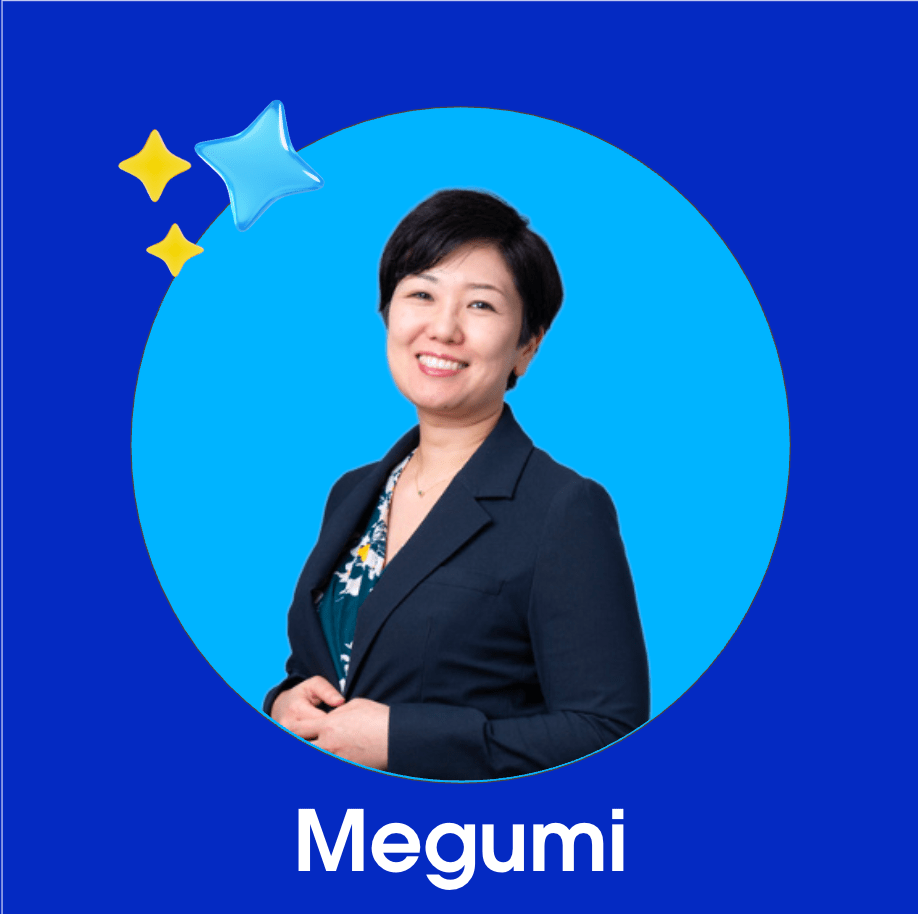
Megumi believes the best ideas happen when people learn together, not alone. When Agentforce and AI started showing up everywhere at work, she saw an opportunity: bring every Equality Group in the Tokyo office together and make learning it a shared experience. What started as one event became a new tradition of colleagues showing up for each other.
That same instinct runs through everything Megumi builds. She’s organized certification events spanning two cities and started a mentoring program pairing women for honest, casual conversation. Her approach is simple: bring people in, and progress follows. As she puts it, “I never want anyone to feel like they’re on their own — we’re stronger when we work as a team.“
What motivated you to organize the first Agentblazer Challenge in your region?
We’re all navigating so much growth with AI, and at this pace, excitement often comes with a little hesitation too. Salesforce’s culture encourages us to move forward together, so I brought all of our Equality Groups behind the Agentblazer Challenge. This became a place to work through certifications side by side, with a help desk for anyone who got stuck. More than 60 people joined across events in Tokyo and Osaka, and a couple even earned their Agentblazer Champion badge during the session itself.
A colleague told me she wouldn’t have been able to do it on her own. It meant everything to know she didn’t have to.
Why is mentoring important to you, and what made you want to start a peer-mentoring program?
Even amid all this AI transformation, people still want that human touch. I started a peer mentoring program through the Salesforce Women’s Network in Japan for women to have another place to build relationships with each other. Women across the org, at every level, volunteered as mentors, creating space for casual conversation, no agenda beyond having a resource outside your own manager or team. Both sides find the program very rewarding, and it’s created a real sense of belonging.
How do you see your personal values reflected in Salesforce’s values of innovation and equality?
I love that Salesforce’s mission is to bring everyone along on AI and I think that’s where innovation and equality meet. But innovation only means something if everyone gets to be part of it. When teammates reached out to support both the Agentblazer Challenge and the mentoring program, it turned one idea into a whole-office effort. That’s what it looks like when those two values work together — people pushing forward on something new, while making sure no one gets left behind.
Continue reading for ways to develop your AI fluency.



The joy of bringing people together
Congratulations to this year’s Agents of Change recipients. Their stories are as unique as they are, but one thing connects them all: each person inspires others to join them, proving that the greatest impact is never created alone.
At Salesforce, we’re fortunate to work alongside people who care deeply about the world around them, and even more fortunate to play a small role in helping them go further. Because when people are empowered to bring their whole selves to work, including the passions that matter most to them, extraordinary things happen far beyond the workplace.
If you’re looking for a place where your passions are welcomed, supported, and shared, we’d love to see what story you’ll help write next.
- Visit our careers site to explore open roles near you
- Join our talent community to stay connected on all things Salesforce
- Continue reading our blog to experience life at Salesforce
AI supported the writers and editors who created this blog.