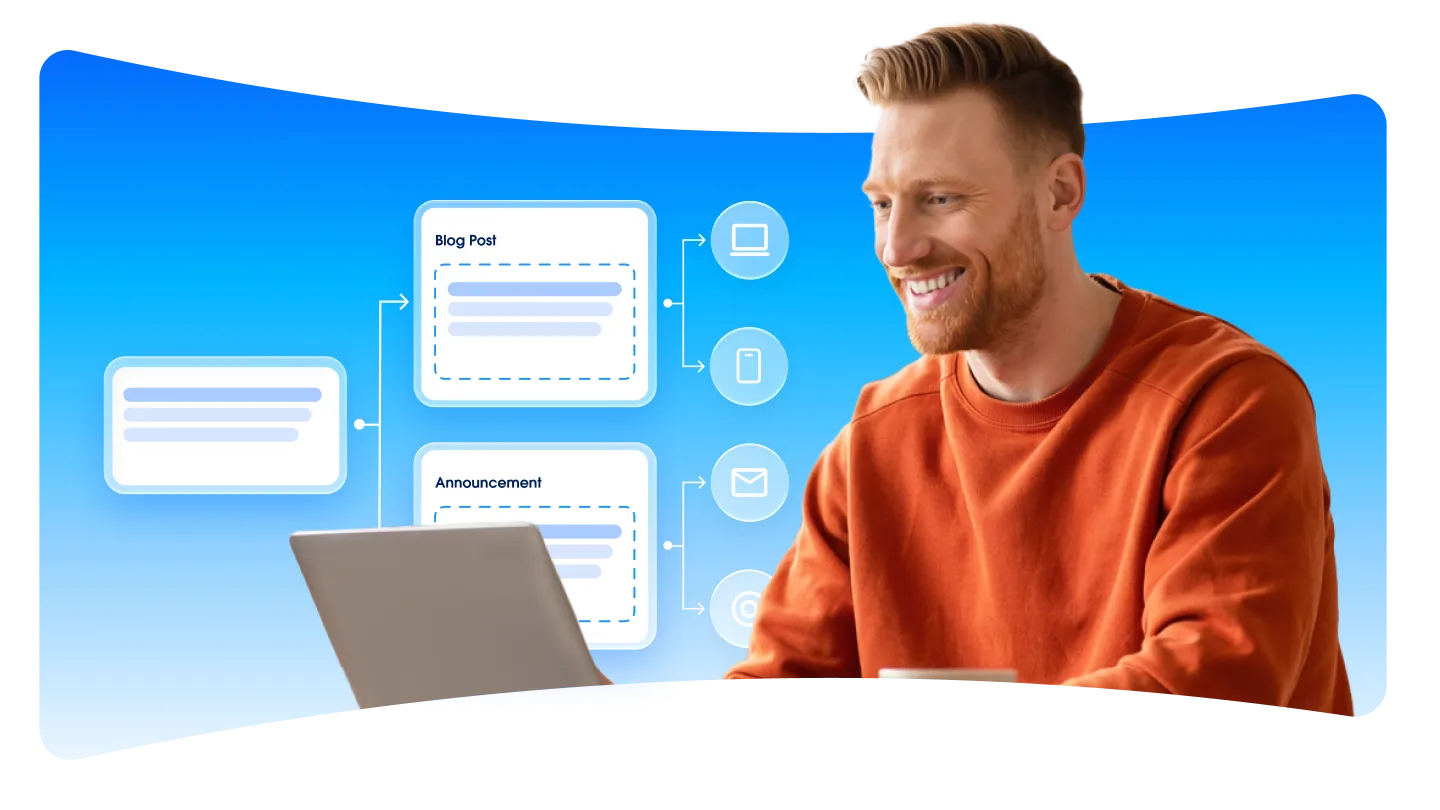
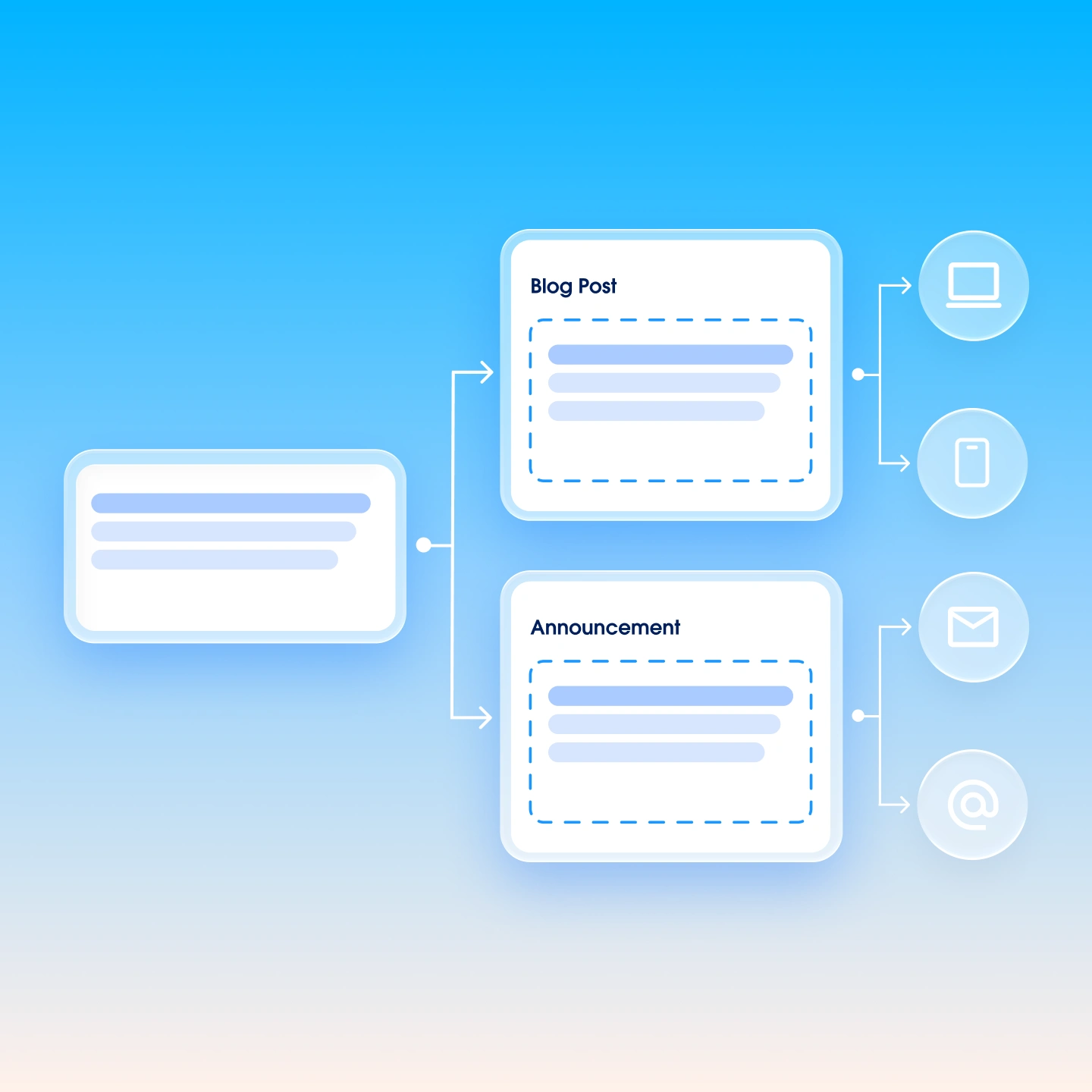
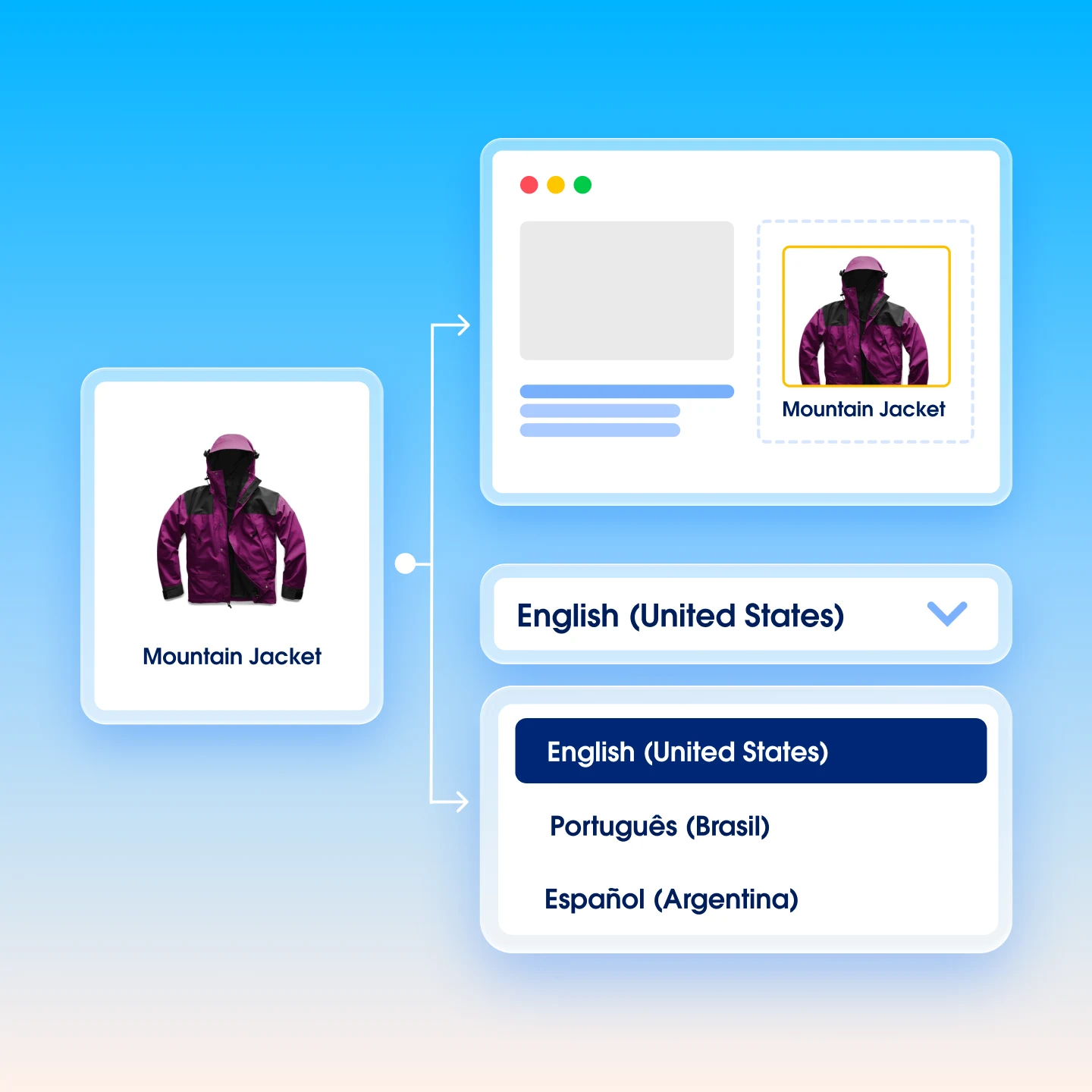
Man in orange sweater smiling at laptop with blue background showing CMS content workflow diagram with post and announcement icons.

What Is a Headless CMS? Architecture, Benefits, and Use Cases Explained

A headless CMS is a content management system that separates the content repository from the presentation layer, storing content as structured data and delivering it to any front end or channel via API.

Headless CMS vs traditional CMS comparison

CharacteristicTraditional CMSHeadless CMS
Content storageStored with presentation templatesStored as structured, channel-agnostic data
Front-end couplingTightly coupled to built-in templatesFully decoupled; front end is built separately
Front-end freedomLimited by CMS template systemNo presentation constraints. Any language, any design pattern, built independently of the CMS
Developer flexibilityLimited by CMS template systemFull freedom to use any front-end framework
Marketer experienceFamiliar "what-you-see-is-what-you-get" (WYSIWYG) editor; marketing creates and publishes without dev teams.Live preview and visual editing, without being locked to page templates. Authors work once in structured fields and the same content reuses across channels
Omnichannel deliveryRequires duplication or workarounds for additional channelsSingle content entry delivers to any channel via API
Time to publish new channelsFast for web; slow or costly for additional surfacesHigher upfront investment; fast expansion once the API layer is built

CMS model comparison

ModelPresentation layerContent deliveryBest for
Headless CMSNone — no built-in web renderingAPI onlyTeams delivering content to a website plus other channels, with marketers authoring in structured fields
Traditional CMSExists within the CMS for web deliveryWeb rendering + API to external front endsTeams that need web output and some API flexibility
Hybrid CMSFull WYSIWYG page-building plus API deliveryBoth traditional and API-basedMarketers who need a visual editor alongside multi-channel delivery

AI supported the writers and editors who created this article.